Blog

  • The 5 Biggest Lies Your Real Estate Agent Told You About Auctions

    The 5 Biggest Lies Your Real Estate Agent Told You About Auctions

    Why Your Agent Won’t Show You This List

    Ask your typical real estate agent about bank foreclosures, and watch them cringe. “Sir, delikado yan (that’s dangerous).” “Ma’am, mahirap ang papers niyan (the papers are hard).”

    Why do they say this? Because auctions disrupt their business model. They want to sell you a pre-selling condo with a fat commission baked into the price. Auctions strip away the fluff.

    Lie #1: “The Titles are Messy”

    Truth: As we’ve discussed, consolidated bank titles are often cleaner than private titles. The bank has a legal department that cleaned it for you.

    Lie #2: “You Need Cash Upfront”

    Truth: False. Our partner banks offer 10-Year Installment Terms with fixed rates. You can buy an auction property with financing just like a developer unit.

    Lie #3: “It’s Only for VIPs”

    Truth: The “Old Boys Club” is dead. With our Hybrid Ecosystem, a 25-year-old freelancer with an ITR can bid against a tycoon. The paddle doesn’t care who you are; it cares about your price.

    Cut Out the Noise

    Don’t let a middleman talk you out of a good deal. Go direct to the source. Join the auction.
  • The 70% Rule: How to Calculate Renovation Costs Instantly

    The 70% Rule: How to Calculate Renovation Costs Instantly

    Don’t Fall in Love. Fall in Like with the Math.

    The biggest mistake new investors make is “emotional bidding.” They see a house and think, “I can make this cute.” Stop. You are an investor. You need Margin.

    The Formula: ARV x 70% – Repairs = Max Bid

    This is the 70% Rule used by professional flippers globally.

    1. ARV (After Repair Value): What will this house sell for after you fix it? (e.g., 5.0 Million).
    2. The 70% Buffer: Multiply 5.0M by 0.70 = 3.5M. (This leaves you 30% for your profit and transaction costs).
    3. Minus Repairs: Estimate the repairs. Let’s say it needs 500k in work.
    4. Max Bid: 3.5M – 500k = 3.0 Million.

    The Discipline

    If the auction bidding goes up to 3.1M, you stop. You put the paddle down. Even if you love the house, the math says you lose money. The PropertyAuctions.ph environment is exciting, but the winners are the ones who know their “Walk Away” number.

    Bring a Calculator, Not Your Feelings

    We provide the base price. You provide the strategy. Do the math before the auction starts.

  • How to Register for Your First Auction in 10 Minutes (Without Leaving Your Couch)

    How to Register for Your First Auction in 10 Minutes (Without Leaving Your Couch)

    The Clipboard is Dead.

    Remember the old days? Driving to a bank branch, filling out 4 copies of a form, and waiting for a manager to sign it? We killed that process. Here is how you get ready to bid for the next PropertyAuctions.ph event from your laptop.

    Step 1: The Account Creation

    Go to PropertyAuctions.ph/Register. Create your profile. This is where you upload your standard KYC (Know Your Customer) docs:

    • Valid Government ID (Passport/Driver’s License)
    • Proof of Income (ITR or Payslip)

    Step 2: The Asset Selection

    Browse the e-Catalog. “Add to Watchlist” the properties you are interested in.

    • Pro Tip: Download the “Offer to Buy” form directly from the listing page.

    Step 3: The “Show Money” Upload

    You don’t need to hand-carry the check days before.

    1. Go to your bank. Get the PHP 25,000 Manager’s Check payable to the partner bank.
    2. Take a clear photo of the check.
    3. Upload it to your Bidder Portal.

    Once our team verifies the image (usually within 24 hours), your account status turns “BIDDER READY”. You will receive the Zoom link/Livestream access code for the auction day.

    Digital is Faster

    Don’t let paperwork slow you down. Get verified today so you are ready when the hammer falls.

  • The “Premier Tranche”: Why You Should Watch the Expensive Stuff

    The “Premier Tranche”: Why You Should Watch the Expensive Stuff

    Not Just “Low Cost” Housing

    There is a misconception that bank auctions are only for low-cost row houses in the provinces. Enter: The Premier Tranche.

    Every quarter, we curate a specific list of “Blue Chip” assets. These are properties in exclusive subdivisions, commercial lots on main highways, or prime condo units in CBDs (Central Business Districts).

    Why “Premier” Assets Go to Auction

    Why would a bank auction a 20 Million Peso mansion in Alabang? Usually, it’s not because the asset is bad—it’s because the bank needs Liquidity. Basel III regulations force banks to dispose of high-value non-performing assets quickly to free up capital.

    The “Exclusive Auction Price”

    Because the bank needs to move these big-ticket items fast to reduce their “Risk Weighting,” they often price them aggressively. You might find a property with a Market Value of 25M starting at a bid price of 18M. That is a 7 Million Peso equity spread.

    90 Days Only

    These assets often come with a time limit. The bank grants us a 90-Day Exclusive Mandate to clear them. Once the window closes, they might be repriced or pulled off the market. If you see a “Premier” tag, act fast.

  • Squatters & Headaches: How We Filter Properties Before You Ever See Them

    Squatters & Headaches: How We Filter Properties Before You Ever See Them

    The Elephant in the Room: “May Tao Ba?” (Is there someone inside?)

    It is the first question every Filipino buyer asks when looking at a foreclosed home. You don’t want to buy a house, only to spend the next 3 years in court trying to evict a former owner who refuses to leave.

    Not All Foreclosures Are Created Equal

    Banks classify assets based on “Possession Status.”

    • Red Tag (Occupied): These properties are cheaper, but they come with “baggage.” You, the buyer, are responsible for the ejectment case. This is for advanced investors only.
    • Green Tag (Unoccupied/Clean): The bank has already secured possession. The house is empty. You get the keys immediately after closing.

    The PropertyAuctions.ph Filter

    Our catalog isn’t a random dump of data. We prioritize Green Tag assets. We believe the average buyer shouldn’t have to play lawyer. Before an asset makes it to our “Premier” auction block, we check:

    1. Physical Possession: Is it empty?
    2. Caretaker Status: Is the bank’s security guard currently securing it?

    Don’t Buy a Lawsuit. Buy a Home

    When you browse our catalog, look for the “Vacant” status. It’s the difference between moving in next month or moving in next year.

  •  TCT vs. CCT: Know Your Titles Before You Bid

     TCT vs. CCT: Know Your Titles Before You Bid

    Decoding the Auction Catalog

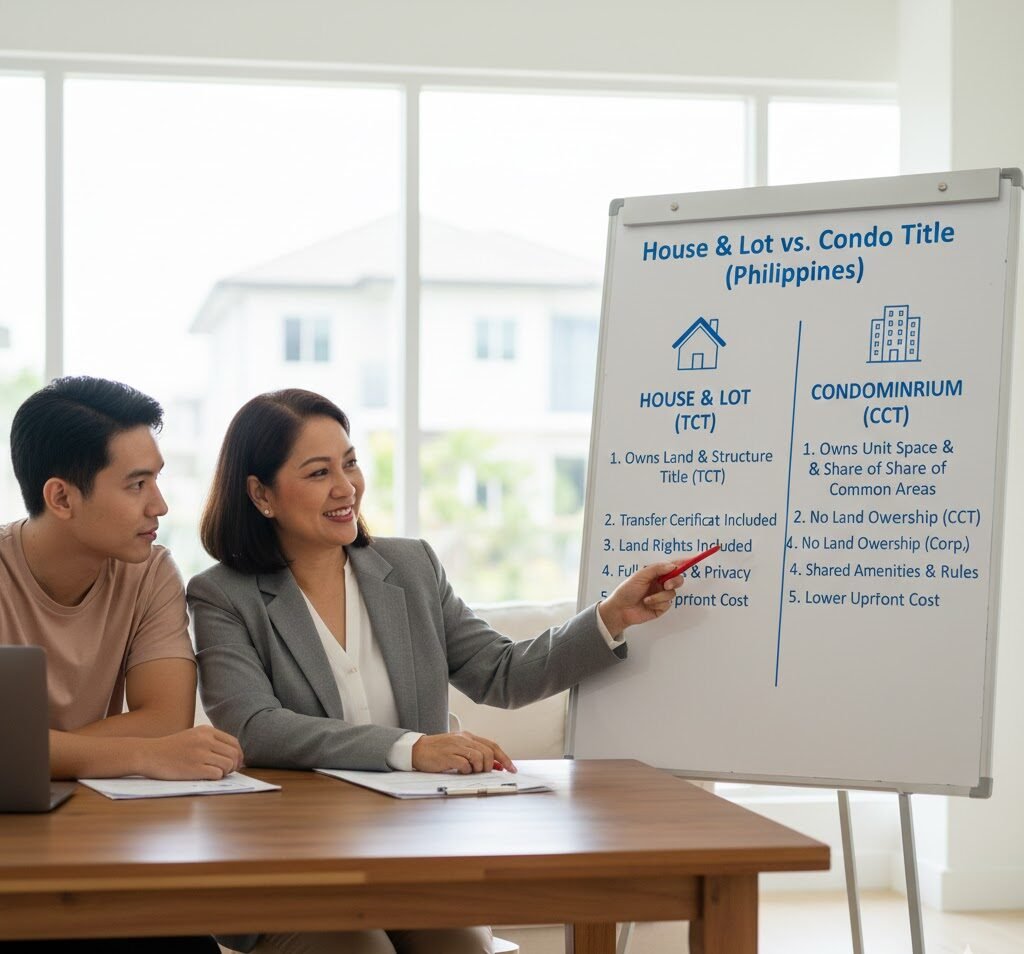
    You are looking at the spreadsheet of properties and you see a column labeled “Title Type.” It says TCT for one, and CCT for another. If you don’t know the difference, you might buy a property you can’t own.

    TCT (Transfer Certificate of Title)

    • What it is: Ownership of the Land and the Structure.
    • Used for: House and Lots, Vacant Lots, Townhouses (usually).

    The Rule: You must be a Filipino Citizen to be named on a TCT. Foreigners cannot own land in the Philippines.

    CCT (Condominium Certificate of Title)

    • What it is: Ownership of the Unit (Air Space), but not the land itself.
    • Used for: Condominiums, Office Units, and some “Condo-Townhouse” developments.

    The Rule: Foreigners CAN buy CCT properties (up to 40% of the building).

    Why It Matters in Auctions

    If you are an expat looking to bid, stick to the CCT column. If you are a Filipino investor, TCT offers land ownership which typically appreciates faster than condo units.

    Always check the column before you raise your paddle.

  • Cash vs. Installment: How to Pay for Your Auction Win

    Cash vs. Installment: How to Pay for Your Auction Win

    You Won the Bid. Now, How Do You Pay?

    So the hammer fell, and the property is yours. Unlike private sales where terms are messy, bank auctions offer two clear paths: Cash or Installment.

    Which one wins?

    The Case for Spot Cash

    If you have the liquidity, Cash is King. Banks love liquidity. While it varies by asset, paying the full amount within the specified timeframe (usually 30 days) often clears you of administrative hurdles.

    • Pros: Immediate title transfer processing; zero interest paid.
    • Cons: Liquidity drain. You tie up all your money in one asset.

    The Case for Installment (Leverage)

    This is where the bank’s flyer reveals a hidden gem. The current terms offer:

    • 20% Down Payment (Manageable entry)
    • Balance payable up to 5 years @ 10% fixed rate
    • Balance payable up to 10 years @ 12% fixed rate

    Why take the loan? If you have 5 Million Pesos, you could buy one house for cash. OR… you could put 20% down on three different houses (1M each), and use the remaining cash for renovations. You now control 15 Million worth of assets with your 5 Million cash. This is called Leverage.

    The “Proof” You Need

    Remember: If you choose installment, you must provide Proof of Income (ITR/COE/Bank Statement). The bank needs to know you can handle the monthly amortization.

  • Rental Yields in Rizal: Why Antipolo is the Next Goldmine

    Rental Yields in Rizal: Why Antipolo is the Next Goldmine

    Manila is Saturation Point. Look East.

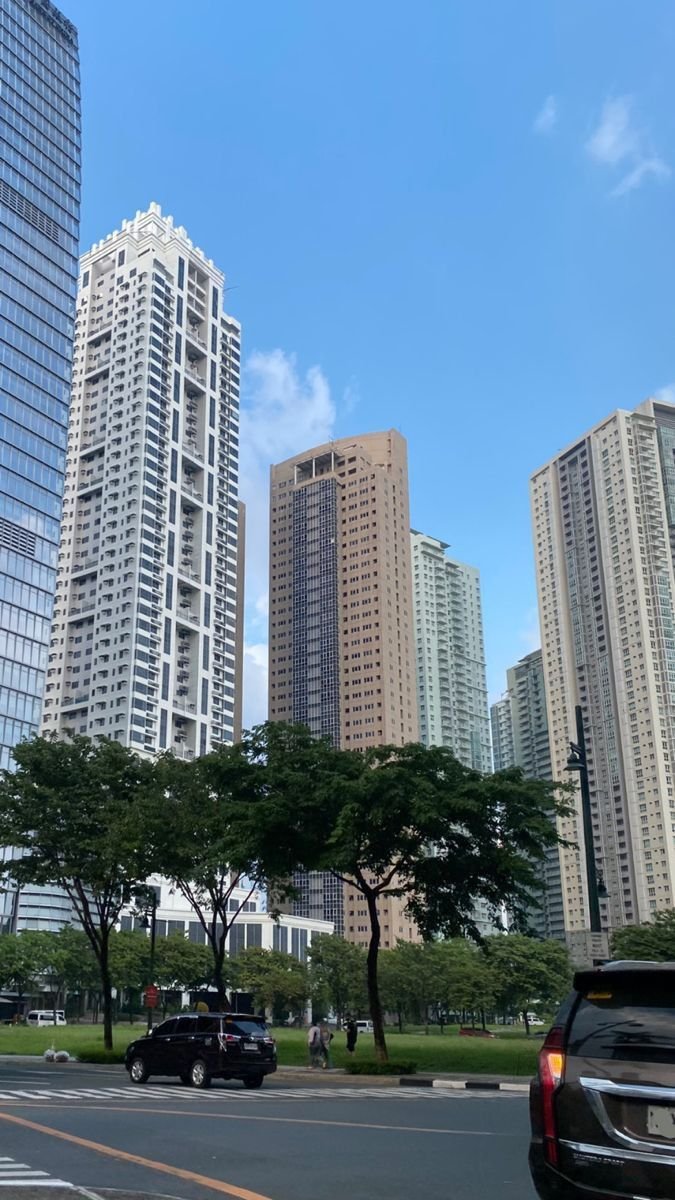
    If you are buying a condo in Makati or BGC today, your rental yield (ROI) is likely hovering around 3-4%. The entry price is too high to make cash flow sense.

    Smart money is moving to Rizal. Specifically: Antipolo, Cainta, and Taytay.

    The “Hybrid” Work Effect

    Post-pandemic, workers don’t need to be in the office 5 days a week. They are trading the shoebox condo for a 3-bedroom house in Antipolo with a garden.

    • Demand is up: Families are renting homes in Rizal for PHP 25k-35k/month.

    Supply is cheap: You can pick up foreclosed townhouses in Rizal auctions for 2.5M – 3.5M.

    The Math (Cash Flow Positive)

    Let’s run the numbers on a typical Auction Asset in Antipolo:

    • Acquisition Cost: PHP 3,000,000
    • Down Payment (20%): PHP 600,000
    • Monthly Amortization (10 Years @ 12%): ~PHP 34,000
    • Potential Rent: PHP 30,000 – 35,000

    You are breaking even or cash-flow positive immediately, while holding an asset that is appreciating as the MRT-4 line extends eastward.

    Don’t Wait for the Train

    Once the new transport infrastructure is finished, property values in Rizal will spike. The time to buy the “As-Is” asset is now.

  • Why “Bank Foreclosed” is Actually the Safest Title You Can Buy

    Why “Bank Foreclosed” is Actually the Safest Title You Can Buy

    The Nightmare of the “Fake Title”

    In the Philippines, buying land from a private seller is terrifying. You hear horror stories of double sales, fake TCTs (Transfer Certificate of Title), or long-lost relatives showing up to claim ownership.

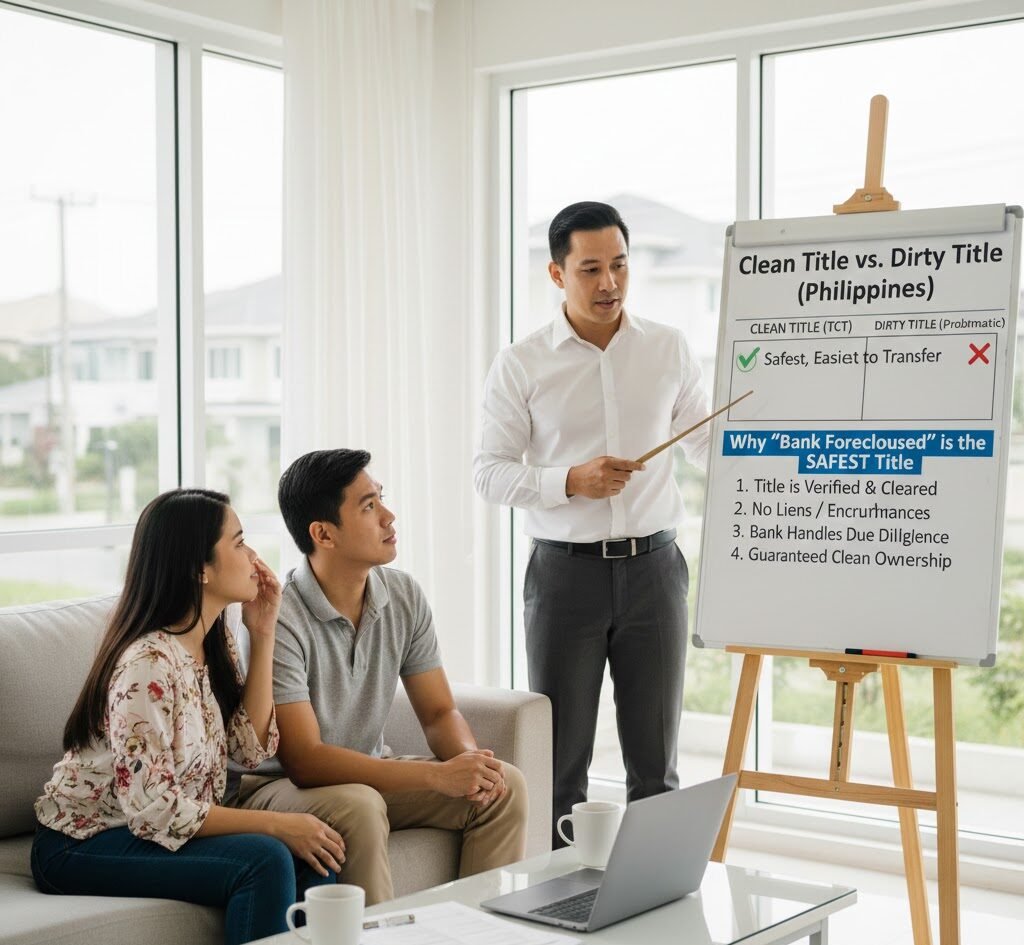
    Here is the irony: People think bank foreclosures are “risky.” In reality, a Bank Asset is often the cleanest title you will ever hold.

    The Power of Consolidation

    When a bank forecloses on a property, they go through a rigorous legal process called Consolidation. This means the bank strips away the previous owner’s name and issues a new TCT under the bank’s name.

    When you buy a “Consolidated” asset from a PropertyAuctions.ph event:

    1. No encumbrances: The bank has already cleared the liens.
    2. No hidden heirs: The legal period for redemption has passed.

    Corporate Seller: You are dealing with a regulated financial institution, not a random person who might disappear with your down payment.

    “Green Tag” vs. “Red Tag”

    Not all bank assets are ready to sell. Banks categorize them to protect you:

    • Green Tag: Title is consolidated, taxes are paid, possession is clear. Ready to go.
    • Red Tag: Usually has legal pending cases or occupied by squatters.

    PropertyAuctions.ph primarily features Green Tag assets. We filter the list so you don’t have to worry about the legal battle.

    Security > Speed

    It might take a few months to process the transfer, but you sleep well knowing the land is legally yours.

  • The “As-Is” Survival Guide: What to Inspect Before You Bid

    The “As-Is” Survival Guide: What to Inspect Before You Bid

    “As-Is, Where-Is” is Not a Suggestion. It’s a Warning.

    When you buy a brand new condo, you get a “punch list” period to fix cracks and leaks. When you buy a bank asset, you get “As-Is, Where-Is.”

    This legal term means you are buying the property exactly as it stands—termites, leaks, and all. The bank explicitly states that “inadvertent misprints shall not alter the factual condition.”

    This doesn’t mean you shouldn’t buy. It means you need to inspect correctly.

    The 30-Minute Inspection Checklist

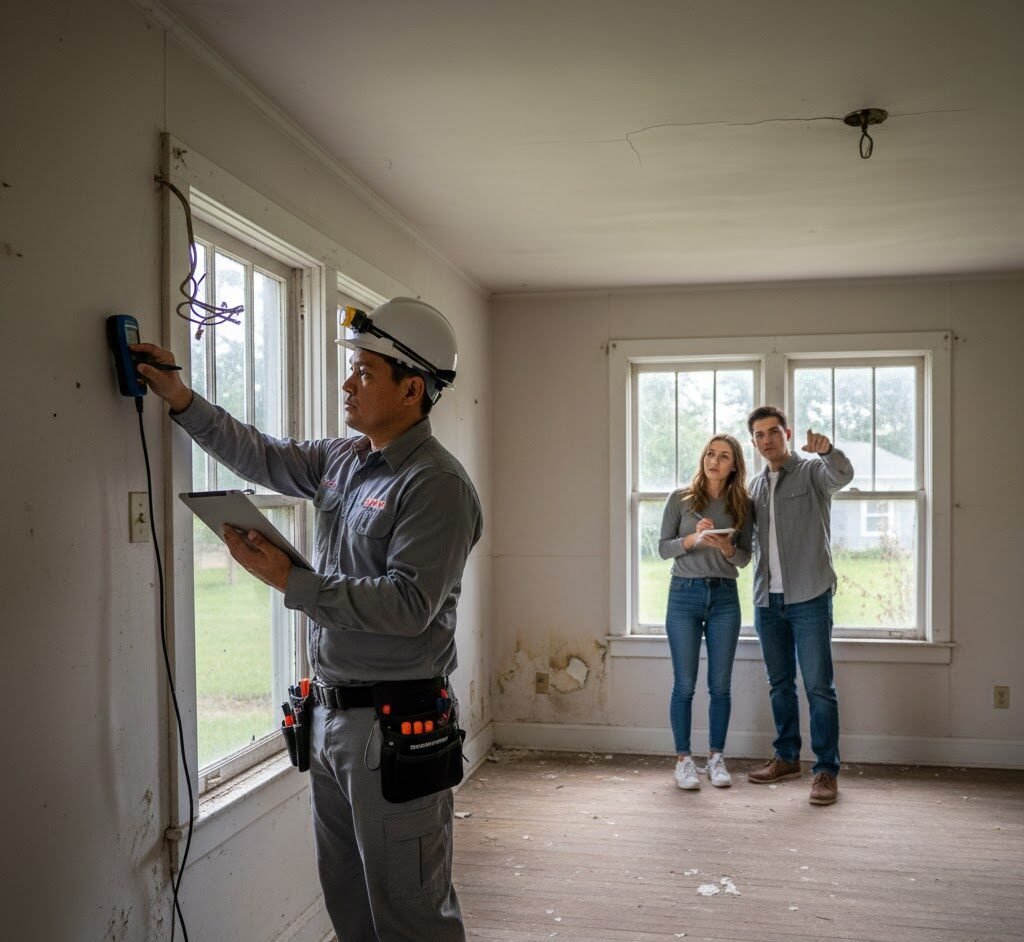
    You don’t need to be an engineer, but you need to be observant. Bring a flashlight and check these three “Deal Killers”:

    1. The Roof & Ceiling (Water is the Enemy) Don’t just look up. Look for brown circles on the ceiling.

    • Small stains: Likely a minor roof leak or loose flashing. (Fixable: ~PHP 10k-20k).
    • Sagging plywood: Active, long-term water damage. This could mean structural rot in the trusses. (Expensive: PHP 100k+).

    2. The Electrical Panel (The Fire Hazard) Open the breaker box.

    • Messy wires/jumper cables: The previous owner likely did DIY repairs or had an illegal connection. You will need to rewire the house to get a Meralco meter.
    • Missing breakers: Common in foreclosures. Copper hunters steal them. Factor in the cost of a new panel.

    3. The Water Pressure Test Turn on all the faucets. Flush the toilet.

    • If nothing comes out, the pipes might be clogged or the pump stolen.
    • If the water is brown, the pipes are rusted (galvanized iron). You will need to replace the plumbing with PVC/PPR.

    Calculate Your “Real” Bid

    If the base price is 3.0M, and your inspection finds 300k worth of repairs, your actual starting bid is 3.3M. If the market value is 5.0M, you are still winning. If the market value is 3.5M, walk away.