Category: Uncategorized

  • How Close is Too Close? The Fault Line Rule.

    How Close is Too Close? The Fault Line Rule.

    The Invisible Line.

    The West Valley Fault runs through major cities like Taguig, Pasig, and Muntinlupa. Buying near it scares people. But you need facts, not fear.

    The 5-Meter Buffer

    The law prohibits building within 5 meters of an active fault trace.

    • The Tool: Use the PHIVOLCS FaultFinder app.
    • The Reality: If the property is 100 meters away, it is generally compliant. Engineers can design for the shaking; they cannot design for the ground rupturing beneath the foundation.

    Knowledge is Power

    If a property is flagged near the fault, the price drops. If you confirm it is safely outside the 5-meter zone, you just found a bargain.

  • The 5-Minute Flood Check: Use This Before You Bid

    The 5-Minute Flood Check: Use This Before You Bid

    “Binabaha ba dito?” (Does it flood here?)

    Don’t ask the neighbors (they might lie). Ask the satellite. Flooding is the #1 value destroyer in Metro Manila. You must verify it scientifically.

    The Tool: Project NOAH / HazardHunterPH

    These are free government tools.

    1. Go to the website.
    2. Pin the location of the foreclosure.
    3. Check the “100-Year Flood Return” layer.

    Interpret the Data

    • Yellow/Red Zones: High risk. Proceed with extreme caution (or elevate the house).
    • No Color: Generally safe.
    • Emotional Benefit: Bidding with the confidence that your investment won’t go underwater.
  • Why “Perfect” Rectangles are Boring (and Expensive)

    Why “Perfect” Rectangles are Boring (and Expensive)

    Don’t Judge a Lot by its Shape.

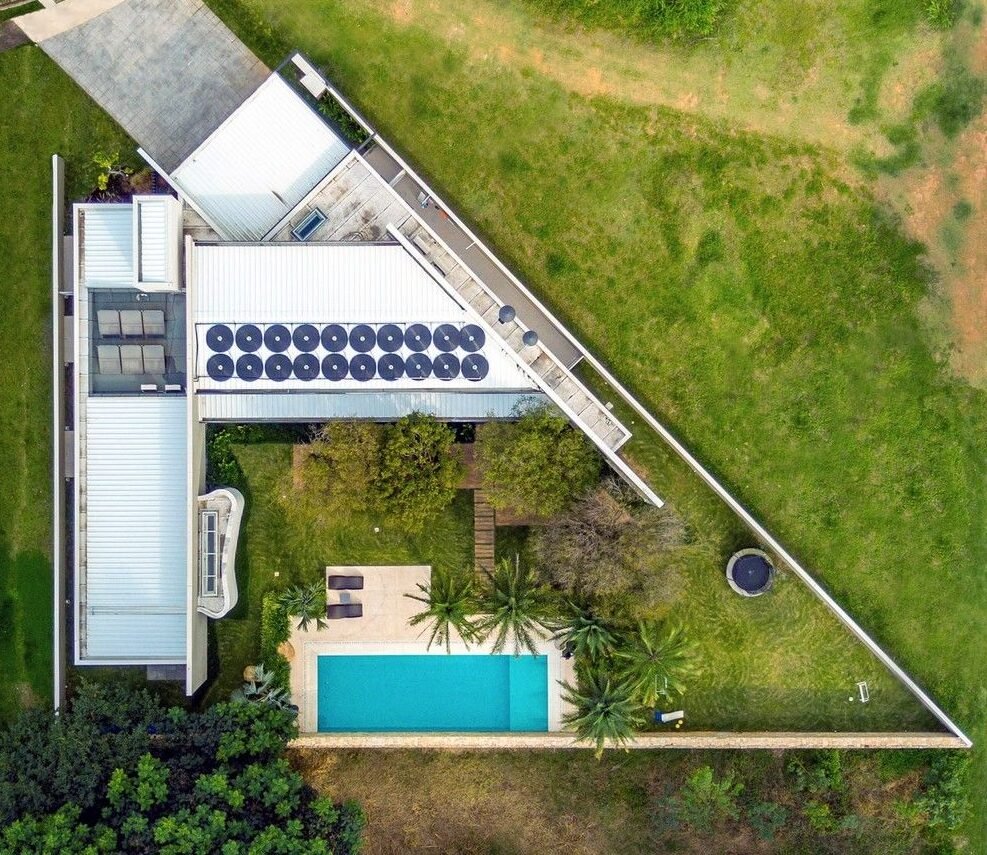
    In an auction catalog, you’ll see “Regular” (Rectangle) and “Irregular” (Trapezoid, Triangle, L-Shape). Regular lots command a premium because they are “easy” to build on.

    The “Wide Frontage” Trick

    Some irregular lots are wide at the front and narrow at the back (pie shape).

    • The Pros: Your house looks massive from the street (curb appeal).
    • The Cons: Smaller backyard.

    The Architect’s Dream

    Irregular lots force creativity. They allow for unique garden pockets and interesting house angles. If you are willing to hire a good architect, an Irregular Lot gives you a unique, custom home for a lower land cost per square meter.

  • Perimeter Lots: Security Risk or Privacy Paradise?

    Perimeter Lots: Security Risk or Privacy Paradise?

    Back Against the Wall.

    A “Perimeter Lot” is a property that sits on the very edge of the subdivision, backing up to the outside world. Buyers are often split on them.

    The Fear (Security)

    The common worry is that someone can jump over the wall.

    • The Due Diligence: Before bidding, check what is behind the wall. Is it a quiet creek? A busy highway? Or a squatter area?
    • The Fix: Most homeowners simply raise the back wall and install electric fencing.

    The Benefit (Privacy)

    The upside? No Backyard Neighbors. You don’t have a neighbor looking into your kitchen. You often have a permanent view. For introverts, this privacy is worth the extra security cost.

  • Morning Sun vs. Afternoon Sun: Is “West Facing” Really a Deal Breaker?

    Morning Sun vs. Afternoon Sun: Is “West Facing” Really a Deal Breaker?

    The “Morning Sun” Premium.

    In the Philippines, an East-Facing lot (Morning Sun) is the gold standard. It’s cooler. It wakes you up. Feng Shui favors it. Because of this demand, Morning Sun lots often attract more bids and higher prices.

    The Case for the “West” (Afternoon Sun)

    West-Facing lots are notorious for getting hot in the afternoon.

    • The Opportunity: Because buyers avoid them, they are often cheaper or have less competition at auction.
    • The Fix: Modern architects solve this easily with “Brise Soleil” (sun breakers), Tinted Glass, or planting a tall tree in the front yard.

    Buy the Discount

    If you can handle the heat (or design around it), buying West is a smart way to get into a premium village for a lower entry price.

  • ROPA vs. ROPOA: Is There a Difference?

    ROPA vs. ROPOA: Is There a Difference?

    The Banker’s Lingo.

    You will see two terms used interchangeably in auction catalogs:

    • ROPA: Real and Other Properties Acquired.
    • ROPOA: Real and Other Properties Owned or Acquired.

    It’s All “Acquired Assets”

    Functionally, for you (the buyer), they are the same. They refer to assets the bank took back as payment for loans. Both carry the 150% Risk Weight under Basel III, which is why banks are motivated to sell them to you. Don’t get hung up on the extra “O”. Just focus on the price.

  • No Power? How to Apply for Meralco in a Foreclosed Home

    No Power? How to Apply for Meralco in a Foreclosed Home

    Bringing the Lights Back On.

    Foreclosed homes often have their meters pulled out (disconnected) due to unpaid bills by the previous owner. As the new owner, you are NOT liable for their old bill (usually).

    The “BFAD” Process

    You apply for a Reconnection or New Service. You will need:

    1. Deed of Sale (Proof of ownership).
    2. Electrical Permit (from City Hall – verify wiring is safe).
    3. Certificate of Final Electrical Inspection (CFEI).

    It takes effort, but a fresh meter means a fresh start.

  • CTC: The Only Way to Verify a Title

    CTC: The Only Way to Verify a Title

    Never Trust a Photocopy.

    Anyone can Photoshop a land title. Before you bid on a property (especially outside of bank auctions), you must get a CTC (Certified True Copy).

    Where to Get It

    Go to the Registry of Deeds (RD) where the property is located. Give them the Title Number. Pay a small fee. They will print the actual records from their vault.

    • If it has a mortgage annotation: It will show up here.
    • If it is clean: It will say “No Encumbrances.”
  • The “LOG”: The Piece of Paper That Works Like Cash

    The “LOG”: The Piece of Paper That Works Like Cash

    The Bridge Between Approval and Payout.

    You got approved for a loan. But the check takes weeks to process. The seller wants assurance. The bank issues an LOG (Letter of Guarantee).

    What It Says

    It tells the seller/developer: “We have approved Mr. Cruz’s loan. Transfer the title to his name, submit it to us, and we PROMISE to pay you PHP 3M.” It is an I.O.U. from a bank, which is as good as gold.

  • CWT: The Tax You Pay Before You Get Paid

    CWT: The Tax You Pay Before You Get Paid

    When the Seller is a Business.

    If you buy from a regular person, you pay Capital Gains Tax (CGT). If you buy from a Bank (like in an auction) or a Developer, you deal with CWT (Creditable Withholding Tax).

    Why It Matters to You

    Usually, the price listed is “Net of Tax.” However, in many bank auctions, the Bank pays the CWT. This is a huge saving for the buyer. Always check the “Terms of Reference” to see who shoulders the CWT.